Business communication is going through another stage of evolution. For years, the primary mode of automated digital interaction has been text-based, dominated by chatbots that, while available 24/7, often lack the nuance and connection of human conversation. Today, a new technology is advancing businesses beyond these limitations by introducing a more scalable, visual, and human-like form of engagement: the AI avatar.
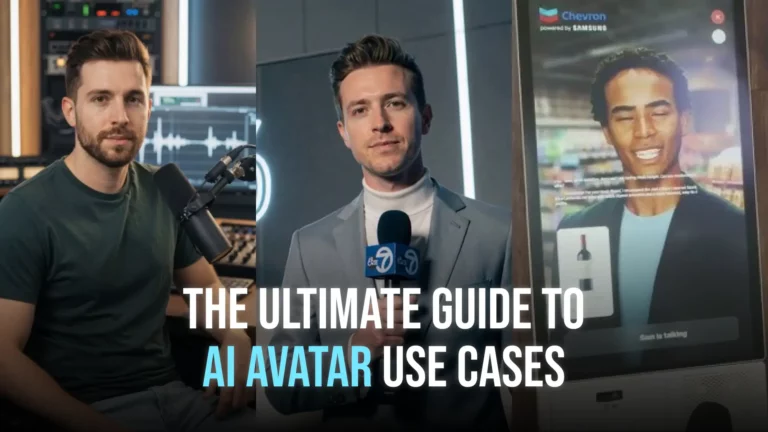
An AI avatar is a realistic, computer-generated digital human designed to replicate human speech, expressions, and movements, thereby creating lifelike virtual interactions. Unlike static avatars used in gaming or forums, these AI-powered digital humans can transform a simple text script into a high-quality, engaging video presentation without requiring an actor, camera, or studio. Essentially, this is a step away from programmed chatbots towards truly dynamic visual communication.
Most importantly, AI avatars have already moved beyond the stage of ambitious concepts. They have become part of everyday reality. They are being actively used right now — not as a niche solution, but across a wide range of industries and fields. To illustrate: in just eight months, the use of AI avatars on one major video platform grew twelvefold. This rapid growth clearly shows that businesses have shifted from experimenting with the technology to actively implementing it.
The global AI avatar market, valued at approximately $7.4 billion in 2024, is projected to exceed $118 billion by 2034, with a compound annual growth rate (CAGR) of more than 30%. AI avatars are no longer a novelty. They are rapidly becoming a key component of modern communication infrastructure.

The "Why": Business Drivers for Adopting AI Avatars
The rapid adoption of AI avatars is driven by their potential to provide significant business value. For decision-makers evaluating this technology, the business case is supported by three key factors: substantial improvements in Cost, Speed, and Scalability. Together, these factors create a strong argument for investment, fundamentally changing how companies create content and communicate with their audiences.
Radical Cost Efficiency: Slashing Production Budgets by up to 90%
One of the most obvious and easily measurable advantages of AI avatars for businesses is the sharp reduction in content production costs. Traditional video production is a resource-intensive process, requiring significant investment in actors, studios, camera crews, sound engineers, and travel. These expenses can make it challenging for businesses to produce large volumes of video content on a regular basis.
AI avatars fundamentally change this model by completely eliminating the need for physical production. According to various companies, switching to AI platforms has reduced video production costs by 50–90%. These savings are easy to calculate, and real-world cases confirm the numbers:
- Teleperformance, a global leader in customer experience management, reported saving $5,000 on each training video created with AI avatars.
- In an anonymized case study of the learning management system provider SmartExpert LMS, production cost savings amounted to $70,000.
This optimization is achieved by removing the most expensive components of video production. There are no costs for studios, equipment, camera crews, or actors. This allows companies to reallocate budgets from tactical production to strategic initiatives.
Unprecedented Speed: From Weeks to Minutes
The pace of today’s market makes the speed of content creation and distribution critically important. Traditional video production, with its complex logistics of scheduling, filming, and post-production, can take weeks or even months to complete. As a result, companies often cannot respond quickly enough to market changes, product updates, or internal communication needs.
AI avatars radically shorten the production cycle. With an AI video generation platform, a user can simply type or paste a script, choose an avatar, and generate a professional-quality video in just a few hours, sometimes even minutes. This acceleration in content creation opens new opportunities for companies striving for flexibility and adaptability.
A vivid example is STUDIO 47, a regional news broadcaster. By integrating AI avatars into their newsroom, they accelerated news production by 80%. Switching to same-day content creation and publication allows businesses to keep pace with the market, ensuring that their communication with clients and partners is always timely and relevant.
Limitless Scale: Global Reach and Effortless Localization
For global organizations, creating and adapting content for different markets has always been a serious challenge. Traditional localization of each video requires hiring translators, voice-over artists, and video editors for every language and region. Clearly, this is an expensive, labor-intensive, and time-consuming process.
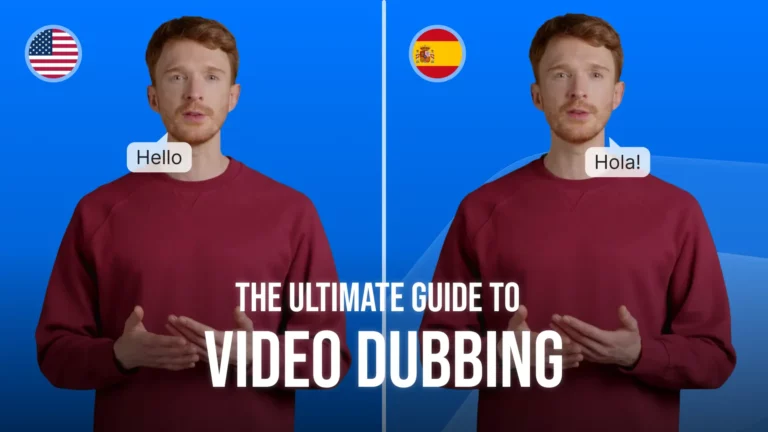
AI avatars simplified this process and reduced the cost of producing culturally relevant content for multiple markets. Advanced tools can take a single script and generate videos in multiple languages with precise AI-powered lip-syncing – all in just a few clicks. For example, Pitch Avatar enables companies to instantly turn a single presentation into a global communication asset. In essence, AI avatars have greatly expanded businesses’ ability to scale their content.
This technology democratizes global marketing and training. It is no longer the privilege of large multinational corporations with massive budgets. Today, businesses of any size can launch coordinated international campaigns and deliver unified training for distributed teams. Even small companies can now afford to provide effective, 24/7 multilingual customer support.
The synergy of these three factors — cost, speed, and scalability — is creating an entirely new competitive environment. It enables a level of “content velocity” that was previously unattainable, allowing agile companies to out-communicate, out-train, and out-market their competitors.
A Map of Opportunity: AI Avatars Use Cases by Industry
AI avatars are not a universal solution: their applications are diverse and tailored to the specific challenges and opportunities within different industries. From personalizing marketing campaigns to transforming corporate training, this technology is creating value across the business landscape. The following sections provide an overview of these opportunities, with links to more detailed explorations of specific use cases.
Marketing & Branding: Hyper-Personalization
Marketing and branding teams face the challenge of cutting through the noise and establishing genuine connections with their audiences. AI avatars are enabling a new level of personalization. They can be used in marketing campaigns to create thousands of unique outreach videos in which the avatar addresses each prospect by name, company, or title. This approach leads to significantly higher engagement and conversion rates, transforming cold outreach into a personal conversation.
Additionally, AI avatars in branding ensure absolute consistency in messaging, tone, and visual identity across all channels, from social media ads to website welcome videos. This technology is a game-changer for account-based marketing (ABM) and scalable video advertising.

Corporate Training & L&D: Revolutionizing Employee Development
One of the main tasks of Learning & Development (L&D) departments is creating training content. It must be engaging, informative, and accessible to a diverse, often global audience. At the same time, despite localization, it must maintain a consistent style and accurately convey a unified message for all audiences. The use of AI avatars in educational and training materials has made this process simple and effective.
L&D teams can create extensive libraries of modules in multiple languages: onboarding materials, software training programs, compliance courses, and much more. Compared to the traditional approach, producing corporate learning content with AI is significantly faster and cheaper. An AI presenter acts as the instructor, ensuring that employees receive the same high-quality training regardless of their location or language. This scalability is especially important for large companies running complex employee development programs.
E-commerce: The 24/7 Virtual Shopping Assistant
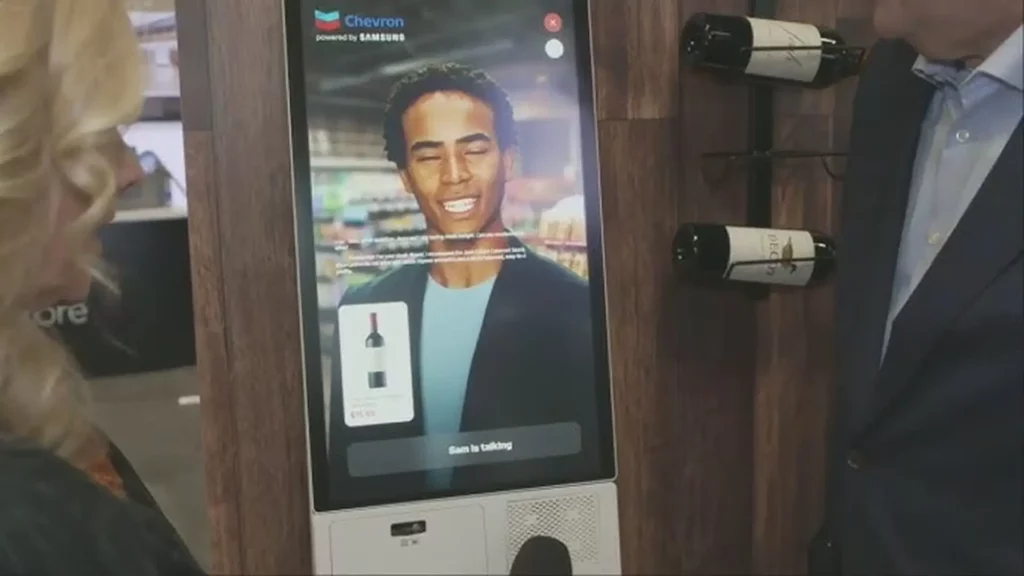
In the competitive world of online retail, the key to driving sales is bridging the gap between an impersonal online store and a live in-store consultant. This is where AI avatars come into play. They can be easily set up as virtual shopping assistants, available 24/7. In this role, they help customers find the right product, explain features, provide comparisons, and answer common questions about shipping or returns. The result is more completed purchases and fewer abandoned carts.

Entertainment & Media: The Rise of the Synthetic Presenter
The entertainment and media industry is experiencing a significant transformation due to synthetic media. AI avatars are being utilized in various roles, such as virtual news anchors providing 24/7 updates, digital influencers promoting brands on social media, and synthetic actors in films and streaming services. The primary advantages of using AI avatars include faster production times, cost efficiency, and the ability to create entirely new types and variations of digital content. This technology not only speeds up and simplifies existing processes but also expands creative boundaries through fundamentally new solutions.
The Technology Explained: From Stock Avatars to Interactive Agents
For business leaders, understanding the technology behind AI avatars involves focusing on the various capabilities available and how they align with specific business needs, rather than delving into the intricate algorithms. This technology can be broadly categorized into three progressive types, each offering different levels of interactivity, cost, and strategic value.
Type 1: Stock & Photo Avatars
This is the most accessible and widely used type of AI avatar technology. The main advantage is speed: stock avatars are pre-made, ready-to-use digital presenters that are licensed for use across various platforms. A user simply selects an avatar from a library, provides a script, and the platform generates the video. Photo avatars are a subset of this type, where a talking avatar is generated from a single uploaded photograph.
This type is the fastest and most cost-effective option, making it ideal for standardized, high-volume content where the primary goal is efficiency. Common use cases include internal company announcements, simple explainer videos, or modules for compliance training.
Type 2: Custom & Personalized Avatars
The next type involves the creation of a custom avatar, often referred to as a “digital twin” of a real person. This is typically a key company figure, such as the CEO, a top salesperson, or a brand ambassador. The process involves recording a short video of the person, which an AI model then uses to create a photorealistic digital replica that can be used to generate new videos from text.
This approach is strategically focused on building brand authenticity and trust. Using a familiar and credible face for corporate communications, leadership messages, or sales outreach creates a stronger, more personal connection with the audience than a generic stock avatar can achieve. It enables leaders to scale their presence without needing to be in front of the camera constantly.

Type 3: Interactive & Conversational AI Assistants
This is the most advanced and transformative type of avatar technology. Unlike the previous types, which deliver pre-scripted content, interactive AI avatars are true assistants that can listen, understand, and respond in real-time during unscripted conversations.
These assistants are powered by a sophisticated technology stack. At their core is a Large Language Model (LLM), the same “brain” that powers systems like ChatGPT, which enables them to understand and generate human-like language. This LLM is often connected to a specific knowledge base (such as a company’s product documentation or sales playbook), allowing it to provide accurate, context-aware answers. The visual representation of the avatar is created using advanced techniques, including Generative Adversarial Networks (GANs), which are AI models that learn to create highly realistic images and animations.
Pitch Avatar utilizes this technology to create AI Chat-Avatars that can act as 24/7 sales consultants, guiding prospects through a product demoы or presentationы and answering questions in real time. These Type 3 assistants are not just communication tools – they are autonomous systems capable of performing complex business functions, such as lead qualification, customer support, and employee coaching. The choice of technology tier is a direct reflection of a company’s strategic goals — from achieving tactical efficiency with Type 1, to building a strategic brand with Type 2, to transforming key business processes with Type 3.
Getting Started: A Framework for Successful AI Avatar Adoption
Adopting new technology can always feel like a complex challenge. The best solution is a structured approach that ensures smooth implementation without unnecessary stress or conflict. For businesses looking to integrate AI avatars, it’s better to avoid a large-scale, “big bang” transformation across the entire company. The most effective path is a focused, iterative process where experience is built step by step, and both leadership and employees gradually recognize the value of the new technology. Successful adoption can be broken down into several simple, practical steps:
- Identify a High-Value Use Case: Begin by identifying a specific, high-impact problem within the organization rather than adopting AI for its own sake. Look for processes that are slow, expensive, or difficult to scale. Good candidates include creating frequent training updates, personalizing sales outreach emails, localizing marketing content or answering common customer questions. The goal is to choose a problem where the ROI of a solution will be clear and meaningful.
- Launch a Small Pilot Project: Instead of risking major investments right away, start with a small, well-defined pilot. For example, the goal might be “reducing the production time for weekly compliance training videos by 75%” or “doubling the reply rate in outbound sales campaigns”. Assemble a small, motivated team and select a user-friendly platform for your testing. A pilot project helps demonstrate the potential of AI avatars and creates a success story that can be shared across the company to gain buy-in from both leadership and employees.
- Define and Measure Success: Before launching the pilot, set clear and measurable goals. If the project is related to training, metrics might include reductions in production time and cost. If it’s marketing, they might include higher click-through rates or more scheduled meetings. Track these metrics closely to build a data-driven business case that shows the effectiveness of AI avatars.
- Iterate and Scale: Once the value of AI avatars has been proven in a small pilot project, you can begin rolling them out across other business processes. Use the insights from testing to refine and improve implementation methods. This iterative process minimizes risk and ensures that AI avatars are deployed where they will have the greatest business impact.
With each passing day, AI avatars are becoming an increasingly important tool for modern business. They help companies scale communication, save resources, and deliver personalized experiences to customers and employees worldwide. From marketing and sales to corporate training and e-commerce, their use is already transforming established processes, opening new opportunities for adaptability, flexibility, and growth.
But the point is not to replace humans. The real power of this technology lies in enhancing them. As Harvard Business School professor Karim Lakhani put it: “AI won’t replace people – but people with AI will replace people without AI”.
Avatars take over routine tasks: standard training modules, typical sales videos, and frequently asked questions. People remain at the center. Their role is to define strategies, find creative solutions, and build meaningful human relationships.
In this vision of the future of work, AI delivers scale, while humans bring ideas, meaning, and connection. Such a partnership will drive profound positive changes not only in business but also in how we think about the concept of “work”.
Frequently Asked Questions (FAQ)
An AI avatar is a realistic, computer-generated digital human that can simulate human speech, expressions, and movements. They are used in videos to present information without needing a real actor, camera, or studio, transforming text scripts into engaging video content.
No. While large companies may build custom solutions, the rise of SaaS platforms makes AI avatar technology accessible and affordable for businesses of all sizes through subscription-based plans.
The process is simple with modern platforms. You typically choose a stock avatar or create a custom one, type or paste your script, select a voice and language, and the platform generates the video in minutes. No video editing skills are required.
Yes, this is one of their most powerful features. Leading platforms can translate a script and generate a video with the avatar speaking in multiple languages, complete with accurate lip-syncing, making global content creation easy.
Unlike a standard avatar that delivers a pre-written script, an interactive avatar is an AI agent that can engage in real-time, unscripted conversations. It listens to user input (voice or text) and responds intelligently, acting as a virtual assistant, coach, or customer service agent.
The technology has advanced significantly. High-end platforms produce avatars with lifelike expressions, gestures, and near-perfect lip-syncing that audiences find highly engaging. However, quality varies between providers, so choosing a reputable platform is key to effectiveness.
The best approach is to identify a specific, high-volume communication challenge, such as creating frequent training updates or personalizing sales outreach. Start with a small pilot project using a leading SaaS platform to prove the ROI and build internal support before a wider rollout.