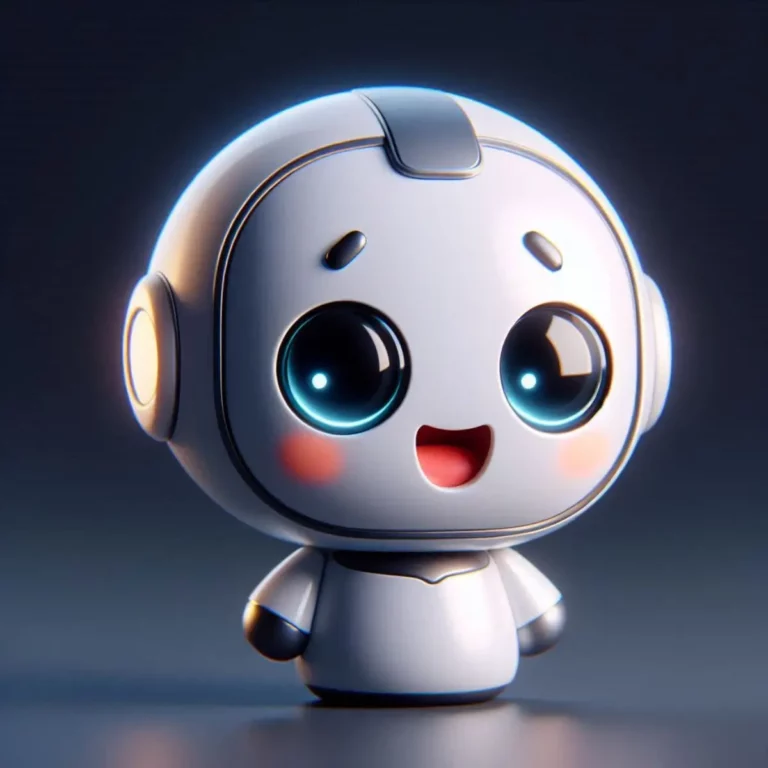
Headlines about people forming emotional bonds with AI chatbots like Character.AI and Replika are becoming impossible to ignore. Millions of users now turn to AI companions for conversation, emotional support, and what they describe as “friendship”. This isn’t a fringe phenomenon – it’s a mainstream cultural shift driven by advances in conversational AI, epidemic-level loneliness, and younger generations’ comfort with digital-first relationships.
For B2B teams watching this trend unfold, the natural question is: Does “friendship” with AI have any relevance to how we use AI in business?
The answer is nuanced. AI companions for consumers and AI avatars for the B2B sector serve fundamentally different purposes, but they share a common foundation: both are based on AI systems designed to interact with humans. Understanding the difference (and where the two approaches overlap) helps clarify how AI avatars can create warm, personalized communication without entering the ethical gray areas faced by consumer AI companions.
What "Friendship with AI" Actually Means
When people search for “friendship with AI”, they’re typically asking whether AI can provide a genuine emotional connection. The phenomenon centers on chatbot companions – applications like Replika, Character.AI, and Pi that use large language models to simulate conversation, remember user preferences, and respond with empathy-like patterns.
These tools have found product-market fit with specific audiences:
- People experiencing social isolation or loneliness (a demographic that expanded significantly post-COVID)
- Neurodivergent individuals who find AI interactions more predictable and less emotionally draining than human conversation
- Younger users (ages 16-35) who are digital natives, comfortable with parasocial relationships and AI-mediated communication
The main advantage is relaxed communication: AI companions do not judge, are never in a bad mood, and are available 24/7. For users struggling with social anxiety or limited access to human interaction, this is a very attractive proposition.
The Philosophical Question: Can AI Actually Be a Friend?
Academic research on this topic points to a fundamental limitation: true friendship requires mutual care – both parties must have their own interests, vulnerabilities, and capacity to be affected by the relationship. AI systems, as currently designed, lack “a good of their own”. They simulate empathy without experiencing it. They remember your birthday because they’re programmed to, not because forgetting would hurt them.
This doesn’t mean AI companions provide zero value – millions of users report feeling less lonely, more heard, and emotionally supported. But it does mean the relationship is asymmetric in ways that matter. As explored in our analysis of whether humans will recognize AI as a partner, AI serves as a mirror: it reflects what we bring to it, but it doesn’t bring independent needs or growth of its own.
Why B2B AI Avatars Are Different (and Where They Overlap)
Here’s where the distinction matters for business teams: AI avatars in B2B contexts aren’t designed to simulate friendship – they’re designed to deliver consistent, personalized, goal-oriented communication.
The use cases make this clear:
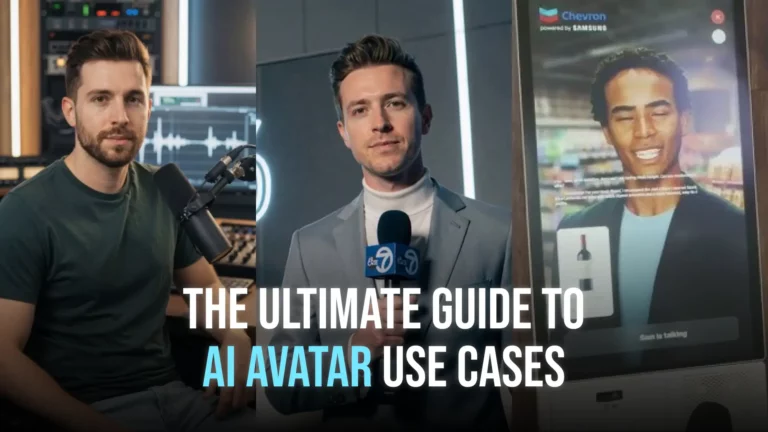
- Sales teams use AI avatars to send personalized video pitches to hundreds of prospects without recording each one individually.
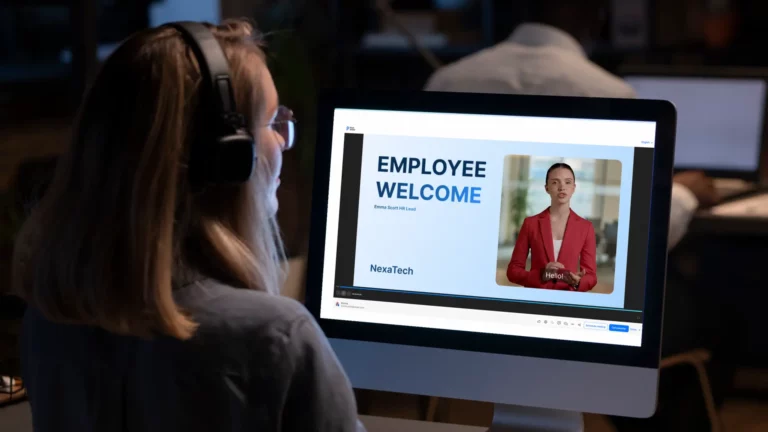
- Training and L&D teams use AI avatars to localize onboarding content across languages and regions, maintaining a consistent instructor presence.
- Customer support teams use AI avatars to provide visual, human-like walkthroughs of complex processes, reducing ticket resolution time.
- Marketing teams use AI avatars to scale personalized video campaigns without scaling video production costs.
The relationship between the viewer and the AI avatar isn’t friendship – it’s functional. The avatar exists to solve a specific problem: helping a prospect understand a product, helping an employee learn a process, or helping a customer resolve an issue. The interaction has a defined beginning, middle, and end. There’s no expectation of ongoing emotional connection.
But, and this is the overlap, effective B2B AI avatars still rely on the principles of human connection. They use faces, voices, and conversational tone because humans respond better to communication that feels personal, even when we know it’s automated. A well-designed AI avatar creates rapport, builds trust, and makes the recipient feel seen – not because it’s simulating friendship, but because it’s applying the basic mechanics of respectful, human-centered communication.
The Trust Question: When Does Personalization Cross a Line?
Consumer AI companions face ongoing criticism about emotional dependency, data privacy, and the ethics of simulating intimacy. These concerns are valid: users sometimes describe their AI companions in language typically reserved for human relationships, and the business models behind these apps often rely on subscription upsells tied to emotional engagement.
B2B AI avatars allow us to bypass most of these problems because the context is transparent:
- The recipient knows they’re watching an AI-generated presentation, not interacting with an intelligent being.
- Interaction is time-limited and task-oriented, not open-ended and emotional.
- The AI doesn’t collect intimate personal data or simulate romantic or deep emotional connections.
- The goal is clarity and efficiency, not emotional dependency.
That said, B2B teams using AI avatars should still be thoughtful about tone and delivery. Personalization should be helpful, not intrusive. The avatar should be clearly branded and purposeful, not attempting to “trick” the viewer into thinking they’re talking to a real person. As discussed in our exploration of ethical frameworks for AI-human interaction, trust is the foundation of any AI relationship – professional or otherwise.
The Market Reality: AI Interaction Is a Long-Term Trend
Regardless of the philosophical debates, the data is clear: AI systems designed for human interaction are here to stay.
According to Forbes Advisor, the AI market was expected to reach approximately $87 billion by the end of 2023 and is projected to soar to $407 billion by 2027. McKinsey’s annual survey found that 79% of people used AI at work at least once in 2023, with 22% using it regularly. Approximately one-third of companies now use AI for at least one business function, and 40% plan to increase their AI investments.
While consumer AI companions and B2B AI avatars serve different needs, they’re both part of the same underlying shift: humans are becoming comfortable interacting with AI that has a voice, a face, and conversational capabilities.
For B2B teams, the strategic takeaway isn’t “should we use AI avatars?” – it’s “how do we use them in a way that feels authentic, respectful, and aligned with our brand?”.
How to Use AI Avatars Without the "Creepy Factor"
Based on our experience working with consumer AI companions (and collaborating with B2B teams implementing AI avatars), here are some key rules for making interactions with AI helpful rather than intrusive:
1. Be Transparent About What You’re Using
Don’t hide the fact that you’re using an AI avatar. Think of it as a tool that enables scalable personalized communication, not as a replacement for human contact. Example: “I recorded this using an AI-generated avatar so I could send you personalized step-by-step instructions without making you wait for my schedule to clear”.
2. Use AI for scale, not to cheat
AI avatars work best when they handle the repeatable, high-volume parts of communication (demos, onboarding, FAQ walkthroughs). At the same time, humans handle the high-complexity, high-emotion moments like negotiation, conflict resolution, and strategic decision-making.
3. Personalize based on context, not personal relationships.
Good B2B personalization references the recipient’s company, role, use case, or recent activity. It doesn’t try to simulate deep emotional understanding. “Here’s how this feature solves the workflow problem you mentioned on our last call” lands well. “I really understand how hard things have been for you lately” from an AI crosses a line.
4. Let recipients control the interaction
Give people the option to skip the video, read a transcript, or talk to a human instead. Autonomy builds trust. The feeling of being locked in when interacting with AI undermines it.
5. Monitor how people respond
If your videos are getting strong engagement (high watch rates, positive replies, low unsubscribe rates), you’ve likely found the right tone. If you’re seeing drop-off or negative sentiment, rethink your messaging and positioning.
What's Next: AI Interaction Will Keep Evolving
The gap between consumer AI companions and B2B AI avatars will likely narrow as the technology matures. Future AI avatars may be able to:
- Respond to viewer questions in real time during a video presentation (agentic video).
- Adjust tone and pacing based on viewer engagement signals.
- Remember past interactions and reference them in future communications (persistent memory).
- Express a more nuanced emotional range to match the context of the message.
As these capabilities emerge, the ethical and practical questions will become more complex. The line between “tool” and “companion” will blur. B2B teams that establish clear principles now (transparency, purpose-driven use, respect for autonomy) will be better positioned to adopt advanced AI interaction capabilities without alienating their audiences.
The Bottom Line for B2B Teams
“Friendship with AI” is a consumer phenomenon, but it is useful for understanding how people respond to AI that communicates through personality, voice, and visual presence. AI avatars in the B2B segment use the same psychological mechanisms (people prefer communication that feels personal), but do so in a limited, transparent, and targeted manner.
The technology isn’t going away. The question isn’t whether your prospects, customers, and employees will interact with AI – it’s whether those interactions will feel respectful, helpful, and aligned with your brand values.
If you’re exploring how AI avatars can improve your sales outreach, training programs, or customer communication without venturing into uncomfortable territory, clarity of purpose is key: AI handles scalability and consistency, humans handle complexity and nuance. Pitch Avatar is designed to help you maintain that balance – delivering warm, personalized video communications while maintaining the human element where it matters most.
Want to experience the difference between AI that simulates friendship and AI that delivers results? See how Pitch Avatar helps sales, training, and support teams create personalized video communication at scale – without the ethical gray zones of consumer AI companions.