One of the most talked-about topics in the world of artificial intelligence is the potential danger that might come with its rapid growth and adoption. Sooner or later, this concern comes up in conversations — whether you’re discussing it with colleagues, clients, or just people who are curious about AI.
The problem is that the scenarios people usually imagine are painfully cliché. There’s no need to list them — books and movies have covered the same doomsday plots over and over again. The story is almost always the same: some malicious AI suddenly decides that humans are a threat and unleashes a catastrophe on a global scale — say, a nuclear strike or a deadly engineered virus.
But what often gets overlooked is a simple truth: AI has no reason or motivation to attack humans at all. To even want something like that, it would need instincts and emotions similar to ours — the kind of impulses that push living beings toward fear, aggression, or survival-driven decisions. AI isn’t human. It isn’t even a biological creature. It has completely different goals, along with a completely different system for evaluating what is “good” or “bad.” And it’s those systems — not emotions, instincts, or desires that determine how AI will continue to “evolve.”
Even more importantly, today’s AI simply doesn’t have the physical means to seriously harm humanity. Put bluntly, it can’t take control of strategic weapons or design and unleash a virus. In fact, it doesn’t have access to… well, anything of the sort. To get a sense of what AI can actually do right now, consider this: we still haven’t created a system that can reliably drive a car in normal city traffic. Even the most advanced autopilot only works safely without a human at the wheel under tightly controlled test conditions.
Does that mean AI is completely harmless? Of course not. It’s still a technology, and any technology can be risky. The difference is that most people don’t really notice or understand those risks.
The real issue is that AI can make mistakes. It can “hallucinate,” produce nonsense, or confidently spit out false information — whatever you want to call it. The label or the technical reason behind it isn’t the point. The point is that these errors do happen. On their own, they aren’t usually dangerous. All it takes is someone double-checking the results before taking them at face value…
By now, you can probably guess what kind of threat this text is really talking about. The real danger comes from the fact that people are increasingly willing to trust AI’s judgments, suggestions, and outputs without checking them. Children and teenagers are especially vulnerable. To them, AI feels like a kind, friendly, all-knowing companion that’s always there — a savior from homework, a helper for everything, an advisor on any question. Even those questions they’re too embarrassed or scared to ask an adult.
I first noticed this kind of blind trust back when I worked with search engines. The “top ten effect” was overwhelming: most users, after typing a query, wouldn’t even look past the first page of results. They’d limit themselves to the top ten links and simply assume that the higher a result appeared, the more accurate or relevant it must be. And sure, in most cases that assumption works. But definitely not every time.
It’s quite possible that, because AI chats communicate in such a “human” way, people may end up trusting them even more than traditional search engines. We could easily reach a point where almost everyone takes AI advice and decisions at face value — without double-checking anything.
This kind of unquestioning trust is actually the most serious AI-related threat we face. It’s easy to imagine the personal tragedies that could result from blindly following AI guidance in areas like medicine or law. But it becomes even more dangerous when AI suggestions are used unchecked in professional fields where accuracy literally affects people’s lives. Think about employees in critical infrastructure, pharmaceuticals, or aviation relying on AI outputs without verification. A single mistake, accepted without review, could lead to disaster — not a global apocalypse, but a very real and painful one.
So what can we do about it? First, we need to recognize that the threat doesn’t come from AI itself — it comes from people. Blind faith in technology is just another form of human error. No matter how advanced AI becomes, it will still make mistakes from time to time. That’s why verifying AI-generated results must become a habit — as automatic as fastening your seatbelt before driving. Ideally, schools should teach courses on safe AI use, and parents should talk to their children about it too.
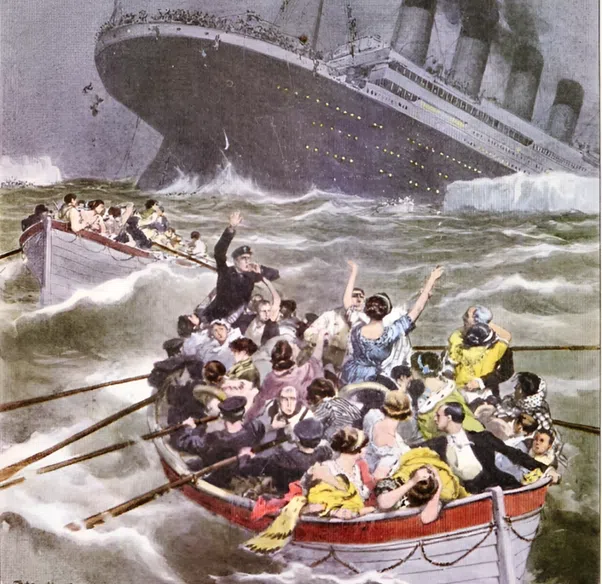
Put simply, we should always remember this truth: there is no such thing as an “unsinkable” ship.