TL;DR: AI dubbing vs traditional Language Service Providers comes down to a cost/quality tradeoff most B2B teams now resolve via hybrid workflows. Traditional agencies run $100–$500 per minute of finished video per language with 2–6 week turnarounds; AI video translation platforms run $2–$20 per minute with same-day turnaround, often 90–95% cost reduction at 95–98% translation accuracy. This guide gives a CFO/Marketing Director-grade cost-benefit framework: where AI dubbing wins (high volume, training, support, social, demos, webinars), where traditional agencies still earn their premium (broadcast brand campaigns, theatrical, complex emotional content), and how the human-in-the-loop hybrid workflow captures the cost savings of AI while preserving accuracy for business-critical content.
For CFOs and CMOs, the “localization dilemma” is essentially a question of resource allocation. The importance of localized video content in the market continues to grow as it provides access to more customers. The problem is that advertising and promotion budgets remain the same. Historically, companies have faced two choices: invest significant resources in high-quality agency dubbing, or settle for low-quality subtitles and amateur voice-overs.
The lack of intermediate options is one of the factors hindering the activities of small and medium-sized businesses in the international market. The emergence of AI-powered translation technology has created a third option: high-quality AI dubbing, which offers a practical balance of cost, speed, and quality. This article provides a comprehensive cost-benefit analysis to help decision-makers choose the right approach for their video localization needs.
Understanding Your Options: Traditional vs. AI Translation
Traditional Language Service Providers (LSPs)
Traditional language service providers and small dubbing studios operate according to a model that has remained unchanged for decades.
The process: these providers employ human translators, casting directors, voice actors, recording engineers, and project managers to deliver localized content. Each language version requires separate casting, studio recording sessions, audio engineering, and quality review cycles.
Advantages:
- Cultural nuance and artistic interpretation.
- Working with complex dialects and regional peculiarities.
- High-quality service with a dedicated account manager.
- Proven quality for high-stakes content.
- Industry expertise and established reputation.
Limitations:
- Cost: industry standard pricing ranges from $100 to $500 per minute of finished video per language, and premium studio dubbing can run substantially higher.
- Turnaround time: projects typically require 2 to 6 weeks for completion.
- Pricing complexity: hidden fees for studio rental, retakes, and rights purchases (rights to use the actors’ voiceovers).
- Scalability constraints: coordinating multiple language versions requires separate studio teams and extended timelines.
- Revision challenges: changes require rescheduling studio time and incur additional costs.
Best for: high-visibility content such as television commercials, feature films, and brand manifesto videos, where production quality is paramount and budget constraints are minimal.
AI Dubbing Solutions
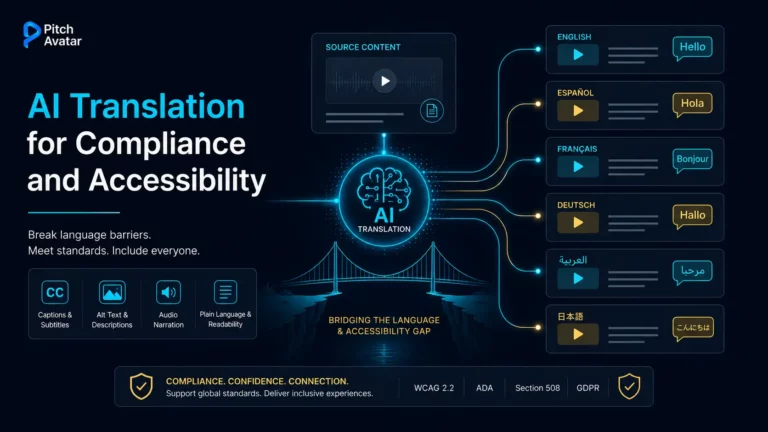
AI video translation platforms operate on a Software as a Service (SaaS) model, using neural networks to automate the translation process.
The process: machine learning systems handle transcription, translation, voice synthesis, lip-sync adjustment, and audio mixing in the cloud. Advanced neural machine translation models process the source content, while text-to-speech systems generate natural-sounding voice-overs that match the original speaker’s tone and intonation.
Advantages:
- Cost efficiency: pricing typically ranges from $2 to $20 per minute, with volume discounts available – often a 90–95% cost reduction versus traditional multilingual video production
- Speed: near real-time processing – a 10-minute video can be dubbed in minutes.
- Scalability: the option to launch content in 10+ languages simultaneously without coordinating multiple teams.
- Consistency: uniform voice quality across all content in your library.
- Iteration speed: quick revisions and updates without scheduling studio time.
- Voice cloning: maintains the original speaker’s voice characteristics across languages.
Limitations:
- May require refinement for extreme emotional range (shouting, soft delivery).
- Industry-specific jargon may need human review for accuracy.
- Despite the rapid improvement in the voice’s naturalness, it cannot always match the level of the best voice actors.
- Regional dialect differences may be less precise than human speech.
Best for: high-volume enterprise content including webinars, training modules, product demonstrations, social media clips, customer support videos, and help center content.
Side-By-Side Comparison
| Feature | Traditional agencies | AI dubbing tools |
|---|---|---|
| Cost per minute | $100-$500+ | $2-$20 |
| Turnaround time | 2-6 weeks | Minutes to hours |
| Scalability | Limited (per-language teams) | Unlimited (simultaneous processing) |
| Languages available | 10-30 (depending on agency) | 50-175+ |
| Revision speed | Days to weeks | Minutes |
| Voice consistency | Varies by actor availability | Consistent across all content |
| Cultural adaptation | High (human expertise) | Moderate (improving with AI) |
| Emotional range | Excellent | Good (improving rapidly) |
| Technical jargon | Excellent with briefing | Good with glossaries |
| Setup time | Weeks (casting, scheduling) | Minutes (account setup) |
This comparison shows that AI dubbing solutions outperform traditional agencies in speed, cost, and scalability, while traditional agencies retain advantages in cultural nuances and artistic interpretation of premium content.
The Real Cost Breakdown: A Data-Driven Comparison

To illustrate the return on investment, consider a company with 10 hours (600 minutes) of educational video content requiring localization into Spanish and French (2 languages). The cost inputs below use industry-standard ranges from current video translation benchmarks.
Scenario 1: Traditional Agency
| Cost component | Calculation | Total |
|---|---|---|
| Translation services | $15/min x 600 min x 2 languages | $18,000 |
| Voice actor + studio | $200/min x 600 min x 2 languages | $240,000 |
| Project management fee (10%) | 10% of subtotal | $25,800 |
| TOTAL COST | $283,800 | |
| Timeline | 3-4 months |
Scenario 2: AI Dubbing Tool
| Cost component | Calculation | Total |
|---|---|---|
| Platform credits | $10/min (avg) x 600 min x 2 languages | $12,000 |
| Internal review (Human-in-the-Loop) | 20 hours x $50/hr | $1,000 |
| TOTAL COST | $13,000 | |
| Timeline | 1 week |
The Impact
The AI solution delivers approximately 95% cost savings and 90% time reduction – figures that align with independent industry benchmarks showing 90–95% cost reduction across leading platforms. This transforms video localization from a capital expenditure requiring board approval into a manageable operational expense, fundamentally changing the possibilities of global content strategies.
For a mid-sized company with annual revenue of $50–100 million, the traditional approach represents a significant investment that requires executive approval and competes with other strategic initiatives. The AI approach fits within departmental budgets, letting marketing and training teams localize content without requiring a dedicated budget.
Hidden Costs To Consider
Traditional agencies:
- Revision fees (typically 25-50% of the original item price, sometimes higher for complex re-recording).
- Additional charge for express delivery (25-50% surcharge for expedited delivery).
- Expanding usage rights when entering new markets.
- Storage and archival fees for master recordings.
- Re-recording costs for updating outdated content.
- Coordination overhead for managing multiple vendors.
- Quality review time for reviewing agency deliverables.
AI solutions:
- Staff time for quality review and corrections.
- Subscription or credit purchases (upfront payment).
- Occasional human post-editing for specialized content.
- Learning curve for mastering the platform (training time).
- Terminology glossary development.
- Integration development for automated processes.
- Control and audit management to maintain stable quality.
Quality Considerations: Measuring Translation Effectiveness
Quality remains a primary factor when evaluating translation options. Understanding how to evaluate and measure translation quality helps make informed decisions.
Key Quality Metrics
Linguistic accuracy: Does the translation convey the correct meaning? Independent comparative tests show that leading AI tools deliver translation accuracy of 95–98% across common language pairs, approaching human translation quality in most applications. Research from leading universities demonstrates that neural machine translation now matches or exceeds human translation for many language pairs in technical fields.
Cultural appropriateness: Does the content meet cultural norms and expectations? This remains an area where human control provides value, particularly for marketing content. Idioms, humor, and cultural references require contextual understanding that AI systems continue to develop.
Voice naturalness: Does the dubbed audio sound authentic? AI voice synthesis has improved significantly, with neural text-to-speech producing increasingly natural-sounding audio. Modern systems capture prosody, intonation, and emotional tone with high accuracy.
Synchronization: Does the audio timing match the video? AI dubbing platforms now include automatic lip-sync adjustment for natural viewing experiences. Advanced algorithms analyze mouth movements and adjust speech timing to maintain visual consistency.
Terminology consistency: Are technical terms and brand names used correctly? This is where human verification provides the most value. Specialized vocabularies require custom glossaries to keep terms consistent across all content.
Audio quality: Is the sound clear, properly mixed, and free of artifacts? Both traditional and AI approaches can produce professional audio quality, although AI systems can sometimes create minor artifacts that require attention.
When Human Touch Matters Most
Certain content types benefit from human translation expertise:
- Marketing content with wordplay, puns, or cultural references.
- Legal or regulatory content requiring certification and liability protection.
- High-emotion narrative content where artistic interpretation adds value.
- Content targeting specific regional dialects (Castilian Spanish vs. Latin American Spanish).
- Material with complex technical jargon requires subject matter expertise.
- Brand storytelling where tone and voice are critical for brand identity.
- Content featuring sensitive topics requires cultural expertise.
Hybrid approach: Workflow With Human Intervention
The most effective organizations don’t choose solely between human and AI translation. Instead, they are implementing a hybrid model that combines the benefits of both approaches.
Step-By-Step Process
Step 1: AI first draft. Use an AI platform to transcribe, translate, and dub the video automatically. The platform handles speaker recognition, voice cloning, and initial quality optimization. This step takes a few minutes, regardless of the length of the video, and creates a completely translated version ready for review.
Step 2: Human quality assurance. A bilingual employee or freelance reviewer watches the AI output, identifying any issues:
- Mispronunciations of brand names or product terms.
- Translation errors or unnatural phrasing.
- Cultural adaptation needs.
- Technical terminology corrections.
- Timing or synchronization issues.
Step 3: Collaborative editing. Corrections are made using the platform’s text editor, adjusting both translation and pronunciation guidance as needed. Most platforms support:
- Direct text editing of translated scripts.
- Phonetic spelling correction for correct pronunciation.
- Timing adjustments for better synchronization.
- Voice selection changes if needed.
Step 4: AI reprocessing. The system regenerates audio based on human corrections, maintaining consistent voice quality and making improvements. This reprocessing typically takes only a few minutes, allowing you to make changes quickly.
Step 5: Final verification. The reviewer confirms that corrections were properly implemented and approves the content for distribution.
Benefits and Best Practices
This process provides human-verified accuracy while retaining the speed and cost advantages of AI automation. A human reviewer can process AI-translated content 5–10 times faster than translating from scratch, since they’re editing rather than creating new text.
Implementation best practices include:
- Creating terminology glossaries for consistent translation of key terms across all content.
- Developing review checklists for quality assurance to maintain consistent evaluation.
- Training internal reviewers on common AI translation patterns and typical error types.
- Establishing clear approval workflows with defined roles and responsibilities.
- Documenting corrections to improve future translations through platform learning.
- Setting quality thresholds (e.g., acceptable error rate per minute of content).
- Building feedback mechanisms to allow for platform adjustments and glossary updates.
Industry-specific applications
Different industries have unique video localization needs and constraints.
E-Learning and Corporate Training
Training content represents an ideal use case for AI dubbing.
Key requirements:
- High volume of content requiring frequent updates.
- Multiple language versions for global workforce.
- Information transfer prioritized over artistic expression.
- Consistent terminology is crucial for learning outcomes.
- Fast turnaround needed for timely training delivery.
Implementation approach: AI-centric workflow with technical accuracy verification by subject matter experts. Organizations typically create extensive terminology glossaries covering role-specific vocabulary, product names, and technical processes.
Results: companies implementing AI dubbing for training content report significant increases in language coverage (often an order of magnitude more languages than traditional workflows can support), cost reductions of up to 90–95% versus traditional multilingual video production, the ability to update training materials within days of a policy change, higher completion rates for training in employees’ native languages, and reduced onboarding time for international employees.

Marketing and Sales Content
Marketing teams benefit from AI translation for several content types:
Product demonstration videos: AI dubbing supports rapid localization of product demos for international markets, enabling synchronized global product launches rather than staged rollouts limited by translation capabilities.
Customer testimonial localization: while authentic customer testimonials work best in the customer’s native language with subtitles, explanatory content and framing can be dubbed to match the target market’s language.
Social media content at scale: the volume and velocity of social media content (daily or weekly posts) makes traditional translation impractical. AI helps creators maintain a consistent presence across language-specific channels and audiences.
Webinar recordings: live webinars can be quickly translated and distributed to audiences in other time zones and language markets, extending content value and reach.
Sales enablement materials: product presentations, competitive positioning videos, and sales training content can be localized for international sales teams, supporting consistent messaging across markets.
Strategic considerations: higher-budget brand campaigns may still require the use of traditional agencies to create primary content, while AI will be used to create supporting content and assets.
Customer Support and Documentation
Support organizations use AI dubbing to:
Localize Help Center video libraries: transform text-heavy help documentation into video tutorials in multiple languages, improving customer self-service rates and reducing support ticket volume.
Create multilingual onboarding content: new customer onboarding videos in the customer’s native language reduce confusion, decrease support contacts during critical early stages, and improve customer satisfaction scores.
Translate troubleshooting guides: step-by-step video troubleshooting guides help customers resolve issues without contacting support, especially effective when delivered in native languages.
Scale support content across regions: as companies expand geographically, AI translation lets support content scale without proportional increases in content production budgets.
Reduce support ticket volume: organizations report a significant reduction in support calls related to issues covered in localized videos, as customers successfully resolve issues themselves in their native language.
Healthcare and Pharmaceutical
Healthcare organizations face unique requirements including regulatory compliance and the critical importance of accuracy.
Applications:
- Patient education videos.
- Medical device training.
- Clinical trial explanations.
- Telemedicine instructions.
- Healthcare worker training.
Special considerations: human review by qualified medical translators is essential for patient-facing content. The hybrid approach works well: AI provides initial translation, medical professionals review for accuracy, and AI makes corrections. This preserves the cost and speed advantages while maintaining medical accuracy and regulatory compliance.
Technology and Software
Software companies use video translation for:
Product tutorials and documentation: technical how-to content explaining software features, workflows, and best practices in users’ native languages.
Developer training and API documentation: video content for developer communities, localized to expand developer adoption in international markets.
Release announcements and updates: quickly localize product update videos to inform global user bases simultaneously, rather than sending out regional announcements.
Implementation success factors: building comprehensive glossaries of technical terms, UI elements, and product-specific vocabulary keeps translation consistent and matched to the localized software interface.
Making the Right Choice: AI Dubbing vs Traditional Agencies Decision Framework
Select your translation approach based on the Content Value Pyramid:
Top tier (premium brand content): use traditional agencies. This includes television advertising, cinema releases, and high-stakes brand videos where production quality directly impacts brand perception and the cost of quality issues is high.
Middle tier (digital marketing): use AI with human review. This includes YouTube content, social media campaigns, and digital advertising where speed-to-market and volume matter, but quality remains important.
Base tier (operational content): use AI-first workflows. This covers training videos, internal communications, product tutorials, and support documentation where information transfer is the primary goal and production volume is high.
Volume and Frequency Considerations
Low volume (< 100 minutes/year): either approach works. Decision should be based on content type and quality requirements, not on cost.
Medium volume (100–500 minutes/year): AI solutions provide significant cost advantages while maintaining quality with human review.
High volume (500+ minutes/year): AI translation becomes essential for scaling. Traditional agency costs become prohibitive, and timeline constraints make human-only workflows impractical.
Implementation and technical considerations
Getting Started With AI Dubbing
Most platforms, including Pitch Avatar, offer straightforward implementation:
- Cloud-based access requiring no special hardware.
- Support for common video formats (MP4, MOV, MKV, AVI, WebM).
- Integration capabilities with existing content management systems.
- Collaborative features for team workflows.
Security and Compliance
When evaluating B2B purchases, the level of security is as important as functionality. Enterprise-grade AI dubbing platforms typically comply with the SOC 2 Type II standard, provide GDPR-compliant data processing, role-based access controls, and audit logs for all translation jobs. For regulated industries (healthcare, finance, government), it is important to clarify the vendor’s data hosting options and standard data processing agreements before signing an agreement.
Workflow Integration
The effectiveness of AI dubbing platforms is assessed not only by cost per minute, but also by how well the platform integrates with existing content creation workflows. Look for CMS connectors (typically WordPress, Drupal, HubSpot, Salesforce), API access for automated workflows, webhook support for further automation, and SSO compatibility (SAML, OAuth) for corporate identity management. Pitch Avatar specifically connects to HubSpot, Salesforce, Gmail, Outlook, and PowerPoint, which is useful for sales and marketing teams localizing content already in those systems.
Language Coverage
AI platforms typically support 30–175+ languages, significantly exceeding what most organizations can access through traditional agencies. This supports expansion into markets that would otherwise be too expensive.
Speaker Diarization
Advanced AI dubbing features include speaker diarization, which automatically detects different voices in the source video and assigns distinct AI voice clones to each speaker, maintaining natural conversation flow in translated content.
Conclusion: The Future of Video Translation
The video translation landscape has changed dramatically. AI dubbing platforms have created viable options for organizations that previously couldn’t afford comprehensive localization. Now the choice is not simply a matter of “quality versus cost”, but rather “which approach best suits our specific content, volume, and quality requirements”.
For most organizations, a hybrid strategy delivers optimal results: using AI dubbing with human supervision for the bulk of content, while reserving traditional agency services for premium brand materials. This approach supports global scale while maintaining quality standards and effectively managing costs.
As AI technology continues to develop, the quality gap between human and machine translation narrows even further. Organizations implementing these tools now have the ability to scale global content creation operations and reach audiences that would otherwise remain inaccessible – considering only 25.9% of internet users speak English.
Frequently Asked Questions
Traditional agencies charge $100–$500 per minute for full-service video dubbing, and premium studio dubbing can cost more. AI platforms like Pitch Avatar charge $5–$15 per minute, with volume discounts available for enterprise customers. The difference in cost per minute turns out to be less than the overall figures indicate when you take into account the agency’s hidden costs (editing, rush fees, renewal of usage rights).
AI dubbing typically costs $2–$20 per minute depending on the platform, language pair, and volume. Subscription plans often reduce per minute costs significantly. The cheapest rates on consumer platforms start at around $0.50–$1.50 per minute; enterprise plans with voice cloning, lip-sync, and integrations are more expensive.
Modern large language models achieve 95–98% accuracy on standard business content. Implementing human control brings accuracy to 100% for business-critical applications. The remaining 2–5% gap concentrates in idioms, regional dialect, technical jargon, and brand-specific terminology – exactly what human verification detects.
AI platforms process minutes of video in minutes of real time. A 10-minute video can be dubbed in under 15 minutes. Traditional agencies typically require 2–6 weeks for the same project, while rush orders, which cost 25 to 50% more, can reduce the turnaround time to 1-2 weeks.
Yes. Advanced platforms feature speaker diarization, which automatically detects different voices and assigns distinct AI voice clones to each speaker, preserving the conversational dynamics of the original content.
Increasingly, yes – over 55% of dubbing studios now use AI-based voice cloning. Many agencies now use AI tools for initial transcription and translation, then charge clients for human refinement and quality assurance. This hybrid approach lets agencies reduce costs while maintaining quality standards – though clients typically pay agency rates regardless of how much of the work is done by AI.
Track metrics including: cost per minute translated, time to market for localized content, viewership by language, conversion rates by region, customer support ticket reduction, and revenue from newly accessible markets. The hardest number to capture, but often the largest, is opportunity cost – content delivered in 8 languages instead of 2 because the platform supported it, reaching customers in markets that would otherwise be limited by language barriers in traditional workflows.