I believe I’m not the only one who has encountered the opinion that, in real physical production, artificial intelligence is nothing more than an auxiliary system. A chat that quickly answers questions or generates texts; a virtual AI speaker flawlessly delivering a presentation; an AI artist patiently generating endless variations of images on a given theme; a personal assistant pleasantly reminding you of your schedule – how can any of this be useful on a factory line or in a manufacturing factory? Questions like these from “real production professionals” deserve an answer.
TL;DR: The skepticism is familiar: what’s the point of a chatbot or AI presenter on a factory assembly line? The answer begins with what AI agents in manufacturing actually are – not virtual characters, but autonomous software systems that perceive their environment, make decisions, and act to complete a task. Increasingly, they are built on small language models trained on carefully curated, specialized data and operate as specialists: integrating sensor data, maintaining virtual models of production lines, optimizing robot trajectories, and coordinating their actions as multi-agent systems. They have little to offer the manual assembly lines of the industrial age – but they’re central to “new production,” where technology, real-time data, and people adjust the process in real time. Siemens, BMW and SpaceX are already using similar solutions today.
What an AI Agent Actually Is
Perhaps it’s worth beginning with the fact that AI systems are not just another “convenient little program” for generating texts, images, or videos. And AI agents are not necessarily a “virtual person” communicating with a client instead of a real manager or salesperson.

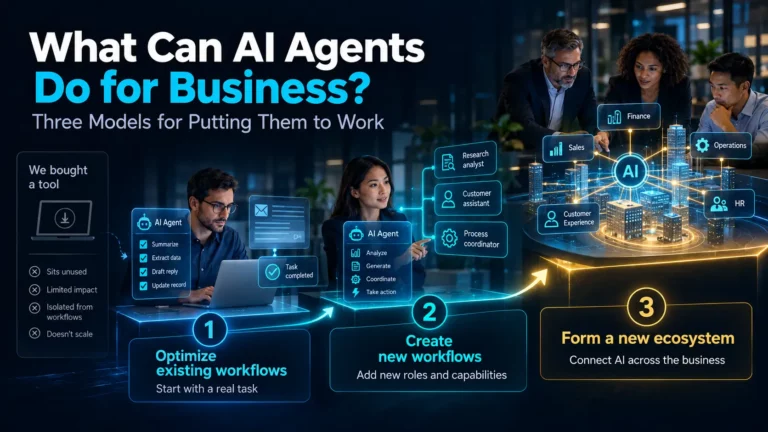
First and foremost, modern AI is designed for fast and in-depth work with information. An AI agent is a software system that, with a high degree of autonomy (based on the information it has been trained on and the tasks assigned to it), perceives its environment, makes decisions, and performs actions. In other words, it does not simply respond to requests: it plans, reacts, and acts in order to accomplish a task. And it doesn’t necessarily have to look like a friendly virtual character. That is nothing more than a convenient interface option.
Specialist Agents and Small Language Models
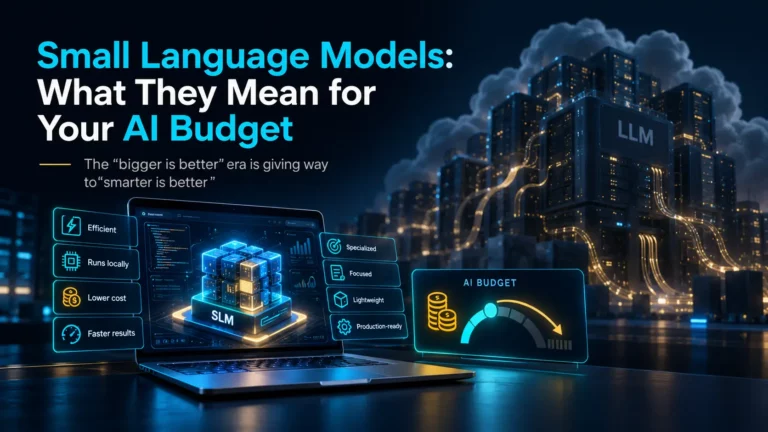
Much more important is the fact that AI agents are, as a rule, specialized systems – and their development increasingly relies on a technology called the Small Language Model (SLM). Unlike the giant general-purpose models trained on vast amounts of heterogeneous data, an SLM is trained on selected, high-quality, verified information from a specific sphere. That is what makes it possible to create AI agents that are genuine “specialists” in a particular field – small enough, in many cases, to operate directly on factory equipment rather than in a remote data center.
Where Agents Fit And Where They Don't
Now, let’s look at what such AI agents can offer real production. Let me make it clear right away: compared to what existed in the “industrial era”, when manual labor predominated – is practically nothing. Where humans perform routine mechanical work on assembly lines or stand at machine tools, AI agents really have little to do.
But look around, and you’ll see that production models in which people functioned as a kind of “machine” are being replaced by a different approach, which, without going into detail, is called – “new production” or “new industry”.
What is its essence? It’s an approach to organizing the industrial process in which technological innovation, real-time data, and people interact flexibly (complementing each other’s capabilities) to improve productivity, quality, and competitiveness, making changes and adjustments literally in real time. The speed of processing new ideas and testing them experimentally makes it possible to launch new models and prototypes without stopping production.
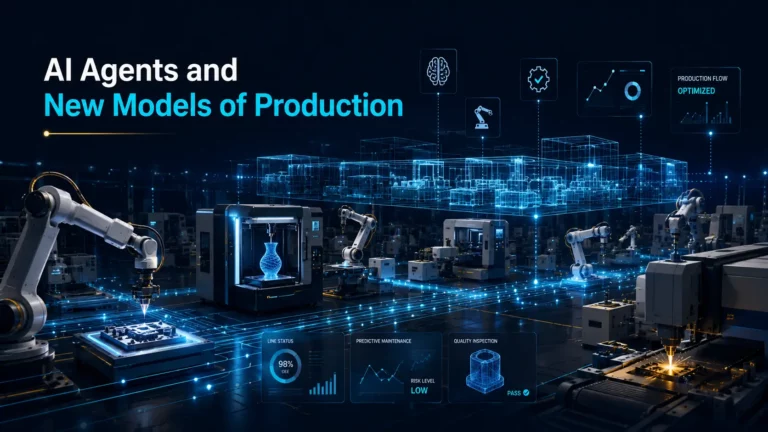
In “new production”, AI systems (primarily specialized AI agents performing manufacturing functions) in combination with 3D printing, programmable laser cutting machines, and robotic assembly lines, play a key role. They significantly increase the speed of calculations, data processing, and virtual experimentation; the preparation of drawings and programs for machines, printers, and robots; and control over production processes from material selection to final quality control and shipment.
It is important that the “new industry” is not simply a more efficient system of producing goods. It’s also an answer to several problems at once. The main one is the labor shortage, which is associated not only with the aging population, but also with the fact that physical labor in factories has lost its prestige. Few people today imagine their career as a machine operator or assembly line worker.
Beyond that, it’s an opportunity to gradually abandon the concept of industrial giants. New manufacturing processes allow for much more compact, modular manufacturing facilities – not to mention the potential for small “garage” production. And it is clear that specialized agents can design production cycles that are as environmentally sustainable as possible

4 Models for Applying AI Agents In New Production
1. Informational model – data integration and virtual models
AI agents act as a bridge between equipment data, sensors, and real processes. In this capacity, they collect, sort and analyze real-time data (sensors, IoT), and maintain virtual models of production lines, machines and components (commonly referred to as digital twins) used to predict failures and build optimization scenarios.
This use creates an informational layer that reduces uncertainty and speeds up decision making.
2. Operational model – autonomous and semi-autonomous actions
AI agents do more than just analyze and process data. They have autonomous logic that allows them to perform and control a wide range of tasks:
- Optimizing robot trajectories, assembly planning and allocating resources;
- Interacting with MES/SCADA and other digital production-management platforms;
- And handling quality control, failure prediction, and line reconfiguration.
Agents can also operate as a distributed system (a multi-agent architecture), coordinating their actions with each other, responding to changes in external conditions (changes in demand, equipment failure) and adapting the process without constant direct human control. This approach is now known in the industry as Agentic AI.

3. Collaborative model – Human + AI agents
One of the key principles of “new production” is the effective combination of people and technology. AI agents complement human skills where expertise, flexibility, critical thinking, and learning from experience are required. An agent can:
- Suggest to a technologist or engineer the optimal next step based on data analysis;
- Act as an intelligent assistant in repair, diagnostics, and operational planning;
- And free people from routine tasks – increasing engagement and job satisfaction.
4. Strategic model – transforming fundamental business approaches
AI agents create the foundation for new ways to scale production. They can be used to:
- Create modular, adaptable factories that can be reconfigured for new products;
- Organize hybrid industrial models that combine centralized production with local mini-hubs;
- And accelerate the introduction of innovations, upgraded models, new products, special editions, and customization options.
In this model, AI agents work as a strategic tool for top managers and production organizers.

This Is Already Reality
Most of the above is no longer a forecast. Siemens is investing over €200 million in a fully AI-controlled factory at its Amberg factory in Germany, scheduled for completion in 2030, where AI agents will coordinate order planning, material transport, and production sequencing in real time. BMW introduced physical AI agents and humanoid robots at its Spartanburg factory in 2025, supporting production of more than 30,000 BMW X3 vehicles in ten months, and has since expanded the program to its Leipzig plant.
And the benchmark example of rapid iteration remains SpaceX. By 3D-printing the SuperDraco engine chamber, the company reduced lead time by an order of magnitude compared to traditional machining – according to SpaceX’s own data, the journey from initial concept to first launch took just over three months. It’s a miniature version of the “new production” cycle: designing, printing, testing and refining experimental prototypes at a pace that the traditional space industry has never allowed.
Where to Start
Let me conclude with one piece of advice: When considering AI automation for your company, business, or organization, consider both the concept of new production and the fact that an AI agent can be trained in almost any professional specialty. I do not doubt that this will open up completely new opportunities for your business.
I wish everyone success and fruitful interaction with AI!